
The Future of Energy Efficiency: 7 Trends Shaping the Industry
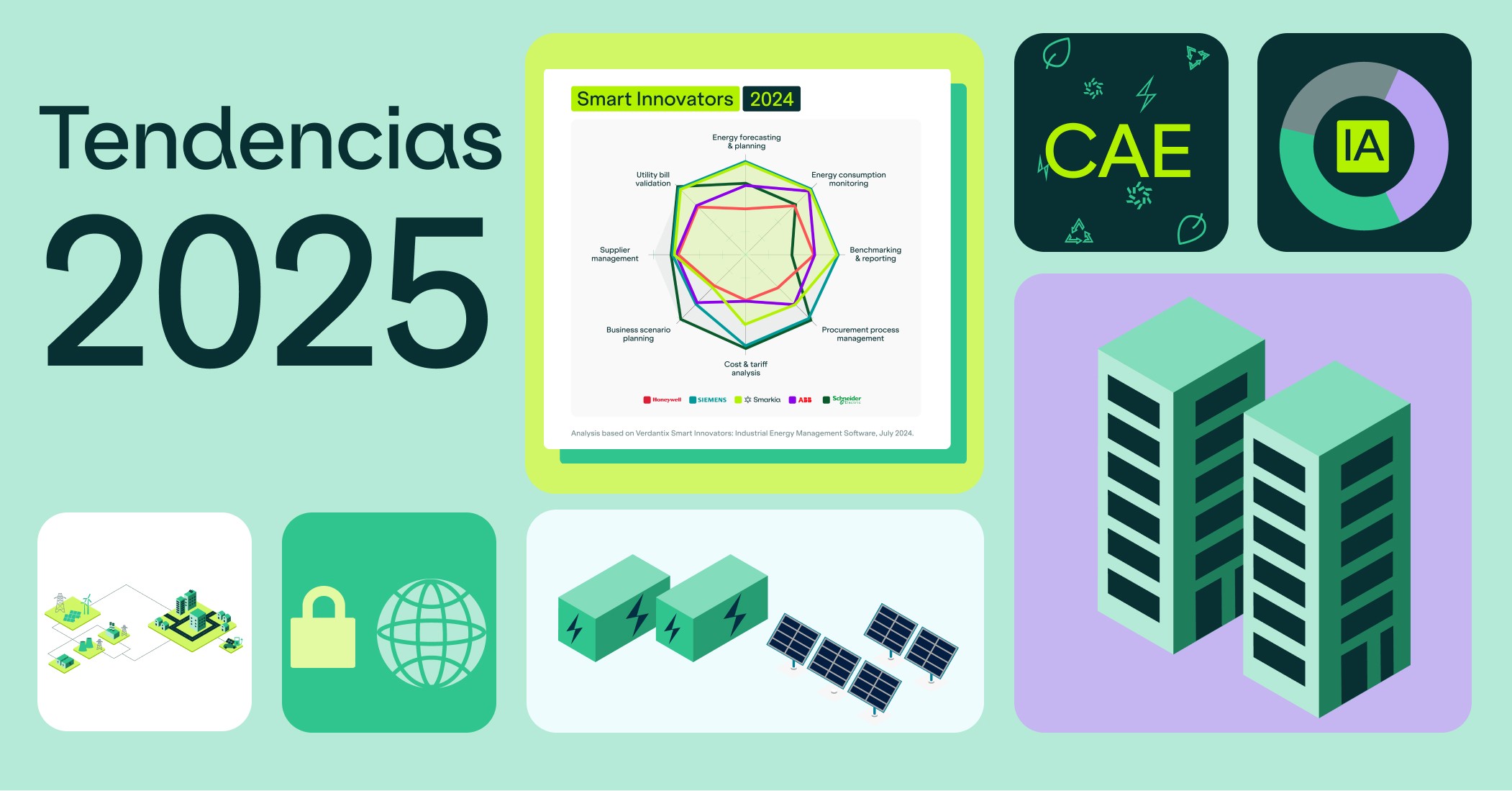
Energy efficiency remains one of the most decisive levers for companies and countries moving toward a more sustainable model without losing economic competitiveness along the way. Here's a rundown of seven trends shaping the direction of the industry that are worth keeping on your radar.
Artificial Intelligence
AI continues to gain traction in the energy sector thanks to its ability to analyze data, predict demand, optimize networks, and detect inefficiencies that would otherwise go unnoticed. Even so, real adoption still has a way to go: according to the EnergIAbySmarkia study, conducted with GFK, only a minority of companies are currently making the most of AI's potential applied to energy, leaving plenty of room for improvement in the coming years.Energy Savings Certificates (CAE)
CAEs make it possible to monetize the energy savings achieved by implementing improvement measures, and they continue to establish themselves as a lever for reindustrialization and climate target compliance in Spain. The National Association of Energy Service Companies (ANESE) continues to actively drive the system: in 2026 it published the seventh edition of its Guide to Energy Savings and Efficiency Technologies, featuring more than 30 technology fact sheets and dozens of success stories, many of them CAE projects. It's a mechanism worth following closely for any company looking to make its efficiency investments pay off before the system reaches the end of its validity period, expected in 2030.Flexibility Markets
Balancing energy supply and demand remains a fundamental challenge, and flexibility markets are one of the most promising responses: they allow consumers to feed surplus energy back into the grid in exchange for financial incentives. In Spain, this area has seen significant regulatory progress with Royal Decree 88/2026, which introduces the figure of the independent aggregator and lays the groundwork for consumers and distributed generators to actively participate in electricity and balancing markets. It's a development worth watching closely in the coming years, as similar demand-response mechanisms advance in other markets as well.Digitalization, Data Analytics, and Automation
These three tools, boosted by AI, continue to gain ground because they make it possible to collect and process large volumes of data, offering a detailed view of consumption and detecting inefficiencies in real time. In this context, EMS systems are establishing themselves as a key solution for advancing decarbonization goals, although investment in this area is still not the norm among companies, suggesting that actual rollout still lags behind adoption.Renewable Energy and Storage
Advances in storage, lithium-ion batteries, green hydrogen, battery degradation management systems, continue to address one of the biggest challenges facing renewables: intermittency. In Spain, the PNIEC 2023-2030 sets a target of 81% renewable electricity generation by 2030, with 160 GW of installed renewable capacity and 22.5 GW of storage capacity, a combination that gives a sense of the scale of investment expected this decade.Infrastructure Modernization and Smart Buildings
The share of companies with truly integrated systems to turn their buildings into smart spaces remains low, according to various industry reports, leaving a clear opportunity to improve the efficiency and security of facilities. This is where AI and energy management platforms like Smarkia play a central role, bringing monitoring, analysis, and building control together in a single system.Cybersecurity
As energy infrastructure incorporates more connected technology, the risks associated with cyberattacks grow as well. Protecting an industry as strategic as energy means ensuring supply continuity, system integrity, and user privacy, and it's an area that will keep growing in importance on the agenda of any energy operator.
These seven trends share a common thread: the combination of more data, more automation, and more ambitious climate targets is forcing the industry to modernize faster than ever. Companies that get ahead of the curve, leveraging technologies like AI and energy management systems, will be better positioned to tackle the challenges of decarbonization, intermittency, and optimization that lie ahead.